Loading...
Serving Cheyenne, WY and surrounding areas. (307) 475-1948
Premier Cheyenne Concrete brings concrete contractor services to Longmont, CO, covering sidewalk building, driveway construction, and patio work - responding to all new inquiries within 1 business day.
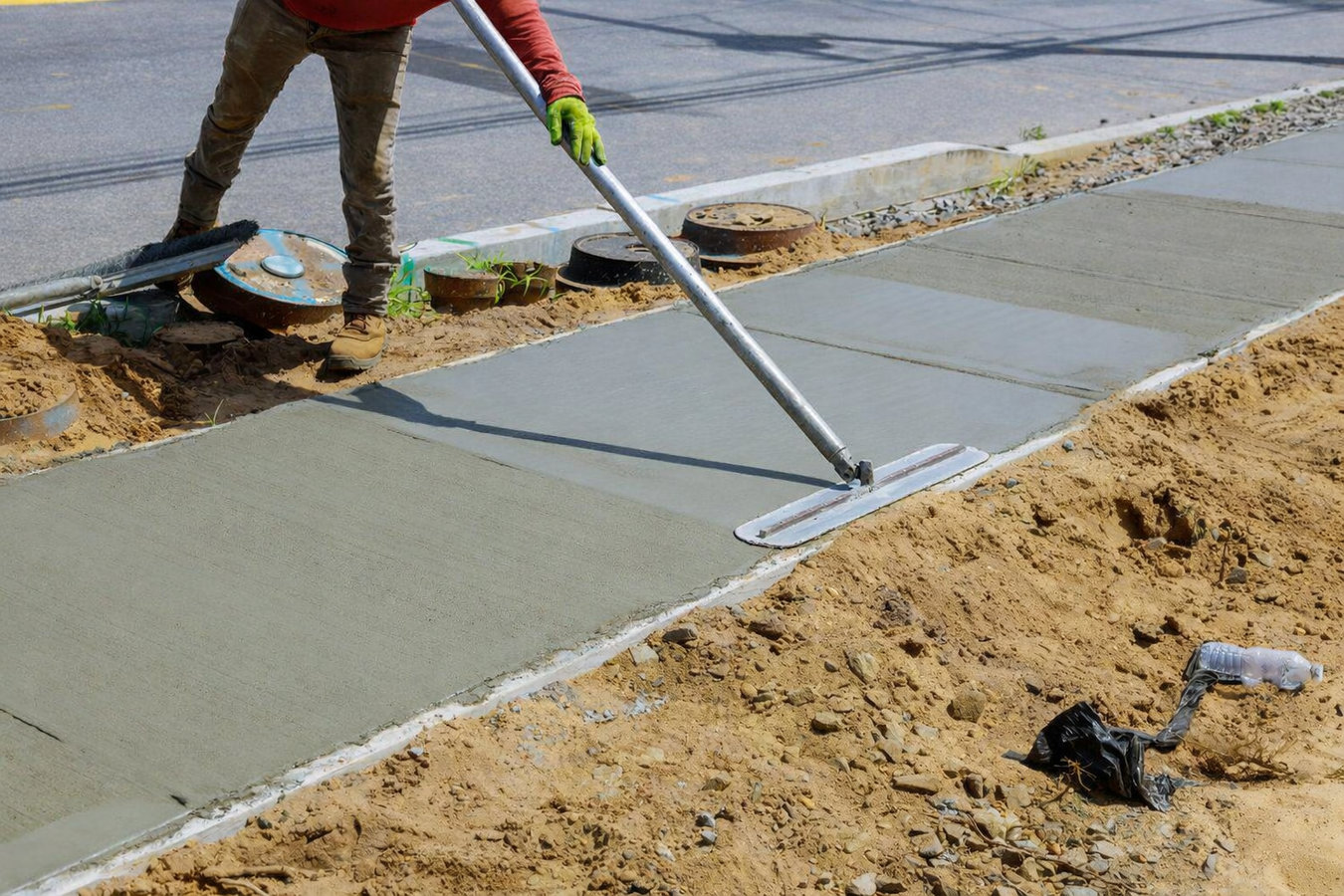
Longmont has a wide mix of housing ages, and older neighborhoods near downtown often have sidewalks pushing 40 to 60 years old that have heaved and cracked through decades of Front Range winters. We build concrete sidewalks with a cold-climate mix and a properly compacted base, so the finished product holds up season after season without the lifting and flaking that plagues older flatwork.
The postwar ranch homes that fill central Longmont - mostly built in the 1950s through 1970s - frequently have original concrete driveways that have been through enough freeze-thaw cycles to crack, pit, and heave. A properly poured replacement with the right gravel base gives those driveways another 30-plus years of reliable use.
Longmont's outdoor season runs from roughly May through October, so a well-built patio actually gets used. We pour patios that drain away from the house, finish with a broom texture for grip on wet mornings, and use a mix designed to handle Front Range temperature swings without surface cracking.
Properties near St. Vrain Creek and in Longmont's low-lying areas face drainage and soil saturation that puts serious pressure on slopes and yard grades. Concrete retaining walls hold that soil in place and redirect water away from foundations, which matters especially for homes in flood-affected zones that were rebuilt or graded after 2013.
Crumbling front entry steps are one of the most visible signs of an aging home in Old Town Longmont, where houses built over 100 years ago still have original or early-replaced steps that have shifted and chipped. New concrete steps built to current depth standards are a safety fix that also makes a strong first impression on anyone approaching the front door.
Longmont sits at roughly 5,000 feet on Colorado's Front Range and averages around 60 inches of snow per year. The freeze-thaw cycle here is relentless: temperatures climb above 60 degrees on a March afternoon and drop below freezing overnight, often several times in a single week. That repeated thermal cycling forces water into the pores of concrete, where it freezes, expands, and chips the surface from the inside out. A driveway or sidewalk poured with the wrong mix or without a proper gravel base will start showing damage after just a few winters.
The 2013 flood left a lasting impression on how Longmont homeowners think about drainage. St. Vrain Creek overflowed and damaged hundreds of properties across the city, and that experience pushed many homeowners near low-lying areas to look more closely at how water moves around their foundations and flatwork. Concrete projects in those neighborhoods need to be graded carefully and built with drainage in mind, not just poured flat and left. Homes on the east side of Longmont sit on soils that can shift with moisture changes, which means base prep matters as much as the concrete itself.
We pull permits from the City of Longmont Public Works and Natural Resources department for sidewalk and driveway projects that fall within the city right-of-way - a step that is required for most street-adjacent flatwork in Longmont and one that protects homeowners if questions come up later. We handle the application, coordinate the inspection schedule, and make sure the job is on record before any concrete is poured.
Longmont has one of the most varied housing stocks along the Front Range. In Old Town, homes date back to the late 1800s and early 1900s, with original foundations and flatwork that has been patched and re-patched over the decades. In central Longmont, the postwar ranch homes built in the 1950s and 1960s sit on modest lots along US-287 and Main Street with aging driveways and sidewalks. On the east side, newer stucco subdivisions near Hover Street are now old enough to need their first major concrete replacements. We work in all of those neighborhoods and know what each one typically needs.
We also serve homeowners in nearby Boulder and Greeley, and we are familiar with the different soil and drainage conditions in each of those communities along the Front Range.
Reach out by phone or through our contact form and we will respond within 1 business day. We will ask a few questions about the project size, location in Longmont, and what is currently there so we can come prepared for the site visit.
We come to your Longmont property, measure the area, check the slope and drainage, and review what needs to come out. You get a written quote that covers demolition, base prep, the pour, and any permits - no vague estimates that grow once work starts.
We remove the old material, compact a gravel base suited to Longmont's soil conditions, and pour the concrete. For projects near the city right-of-way, the permit is in hand before we break ground. Homeowners do not need to be present during the pour, though we are happy to walk you through progress.
You can walk on the new concrete after 24 to 48 hours. If a city inspection is required, we handle the scheduling. We also give you care instructions specific to Longmont's climate - including what to use and avoid during the first winter - so your investment holds up through the freeze-thaw seasons ahead.
We serve Longmont homeowners from Old Town to the east-side subdivisions. Call us or send a message and we will respond within 1 business day.
(307) 475-1948Longmont is a city of about 100,000 people in Boulder County, situated on the plains just east of the foothills with Longs Peak visible on the western horizon on clear days. The city has one of the most diverse housing stocks on the Front Range - ranging from early 1900s bungalows in Old Town near Main Street to postwar ranch homes in central Longmont and newer stucco subdivisions that have grown up around the east side over the past three decades. That range of building ages means concrete work here spans everything from replacing a century-old front walk to pouring a fresh driveway on a 10-year-old property.
Old Town Longmont, centered around the historic Main Street corridor, is known for its brick storefronts and tree-lined residential streets with homes that date back to the late 1800s. UCHealth Longs Peak Hospital and employers like Seagate Technology give the city a stable working-class and professional base, with about 60 percent of households owning their homes. Longmont sits roughly 16 miles north of Boulder on US-36 and is a natural corridor community between Boulder and Greeley, with St. Vrain Creek running through the city as both a recreational asset and a drainage consideration that shapes how concrete projects in low-lying areas need to be approached.
Durable concrete driveways built to withstand harsh Wyoming winters.
Learn moreSafe, level concrete sidewalks for residential and commercial properties.
Learn moreArtistic concrete finishes that elevate curb appeal and property value.
Learn moreSturdy concrete retaining walls that control erosion and grade changes.
Learn moreProfessional concrete floor installation for homes and commercial spaces.
Learn moreSlip-resistant, attractive concrete pool decks built for safety and style.
Learn moreStructurally sound concrete steps crafted for safety and lasting appeal.
Learn moreSolid concrete slab foundations engineered for long-term structural support.
Learn moreExpert foundation installation using proven methods and quality materials.
Learn moreHeavy-duty concrete parking lots designed for high-traffic commercial use.
Learn moreServing these cities and communities.
From Old Town sidewalks to east-side driveway replacements, we know Longmont's neighborhoods and we build concrete that survives Colorado winters.