Loading...
Serving Cheyenne, WY and surrounding areas. (307) 475-1948
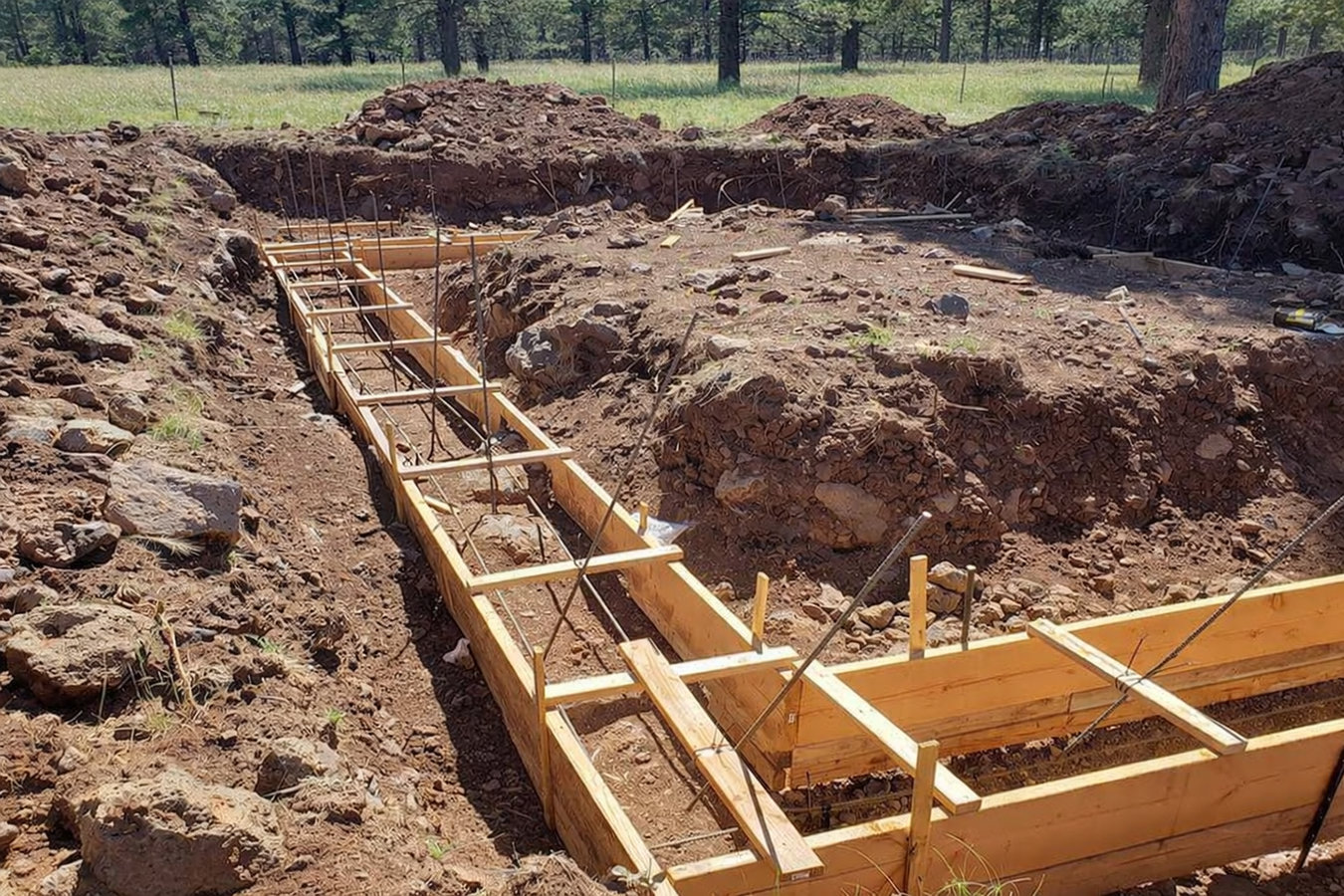
Footings that do not go deep enough in Wyoming will shift, crack, and pull structures apart. We dig to depth, pull permits, and schedule inspections so your project is built on a base that holds.
Concrete footings in Cheyenne involve digging to below the frost line - around 36 inches or more - setting forms, passing a city inspection, and pouring; most residential footing jobs complete the dig and pour in a single day, with a curing period of at least one week before building on top.
The reason depth matters so much in Cheyenne is frost heave. When soil freezes, it expands and can push a footing upward, cracking the concrete and tilting or separating whatever structure sits on top. At over 6,000 feet elevation with hard winters, Cheyenne's ground freezes deep - and footings that would be adequate in a warmer climate will fail here. The city's clay-heavy soils in many Laramie County neighborhoods add another layer of movement from wet and dry cycles that compounds the stress on footings over time.
If you are building a deck, addition, or garage and need both footings and a full foundation system, our foundation installation service covers the complete scope from footings through the foundation wall in one project.
If a structure that used to sit flat and level now looks like it is leaning or separating from the main building, the footings underneath may have shifted. In Cheyenne, this often happens after a winter where frost heave pushed the footing upward and it did not settle back evenly. Getting this inspected before the next freeze prevents the problem from getting significantly worse.
Diagonal or stair-step cracks running through a concrete slab or wall are a sign that one part of a structure has moved more than another - which usually points to a footing problem below. Hairline cracks from normal settling are common, but cracks you can fit a finger into, or cracks that are visibly growing, deserve a professional evaluation.
Any new structure that will carry significant weight or attach to your home needs proper footings before construction begins. In Cheyenne, this is especially important because frost depth requirements here are greater than in most parts of the country. A deck built on footings that do not go deep enough will shift and crack within a few winters - getting this right from the start is far less expensive than fixing it later.
When footings fail, the structure above them moves - and that movement travels. Doors and windows that suddenly stick or no longer close flush are sometimes the first visible sign that something has shifted at the foundation level. If this is happening near an addition, porch, or detached garage, the footings are worth investigating.
We pour concrete footings for decks, porches, additions, detached garages, fences, and outbuildings across Cheyenne and the surrounding region. Every project starts with a site visit, includes a written estimate with permit fees listed separately, and is permitted through the City of Cheyenne Development Services before any digging begins. We coordinate the required city inspection before the pour so you have a clean record attached to your project.
We also handle footing work as part of larger projects that include a full foundation system. If your project calls for a basement, crawl space, or slab on top of the footings, our foundation installation service covers the complete scope. For homeowners dealing with an existing foundation that has started to settle or crack, our foundation raising service addresses that separately.
For homeowners adding or replacing a deck or covered porch - dug to frost depth and sized for the structure's load.
For attached or detached garages and room additions - typically requires a permit and city inspection before pouring.
For fencing projects where posts need to be set below the frost line to prevent heaving and leaning over time.
The full perimeter footing that a foundation wall or crawl space sits on - built as the first step of a complete foundation project.
Cheyenne's frost line sits around 36 inches below the surface - deeper than most of the country - because of the city's elevation and hard winters. That depth requirement means more digging, more concrete, and more labor than the same footing job would require in a warmer climate. On top of that, Cheyenne's expansive clay soils in many parts of Laramie County swell when wet and shrink when dry, putting additional stress on footings that are not sized and reinforced to handle the movement. Both factors are built into how we design and quote every footing project here.
The City of Cheyenne requires permits for all structural footing work, and a city inspector must check depth and placement before concrete is poured. This step protects you - if something is wrong, it gets caught before it is buried underground. We have worked through this process many times and handle it start to finish for every job. Laramie, WY properties have similar frost depth requirements to Cheyenne and we handle footing work there regularly. We also serve homeowners and builders in Fort Collins, CO where frost depth and clay soil conditions create similar footing requirements.
We respond within 1 business day. We will ask what you are building and schedule a site visit before giving you a firm price - any quote given without seeing the site is a rough estimate at best.
We walk the site, assess soil conditions, check equipment access, and measure the area. You receive a written estimate that breaks down labor, materials, and permit fees - nothing is left vague.
We file the required permit with the City of Cheyenne Development Services department and schedule the inspection that must happen before the concrete is poured. We handle both steps on your behalf.
We dig to the required depth for Cheyenne's frost conditions, set forms, pass the city inspection, and pour the concrete. The curing period typically starts at one week before light loads and up to 28 days for full strength.
We will visit the site, tell you exactly what the footings need, and give you a written estimate with permit fees included - before you commit to anything.
(307) 475-1948Cheyenne's frost line sits around 36 inches below the surface, and we dig to that depth on every footing we pour - not to the minimum we can get away with. Footings that sit above the frost line will heave in a Wyoming winter. We have seen the damage that comes from shortcuts, and we do not take them.
We file every required permit with the City of Cheyenne before breaking ground and coordinate the inspection that must happen before concrete is poured. Unpermitted footing work is one of the most common issues that surfaces during a home sale in Wyoming, and we make sure your project has a clean record.
Much of Cheyenne has clay-heavy soils that swell when wet and shrink when dry. We assess soil conditions during our site visit and size the footing to handle that movement. A contractor who skips this step is guessing, and that guess can be expensive when cracking starts a few years later.
Cheyenne is one of the windiest cities in the country, and high-altitude sun dries fresh concrete faster than most areas. We use curing compounds or protective coverings on every pour and monitor the surface during the first days after the job. The American Concrete Institute recommends proper curing protection as foundational to concrete strength - we treat it the same way.
Every footing project we take on in Cheyenne is permitted, inspected, and documented before we pour. For technical reference on best practices in footing design and concrete curing, the American Concrete Institute is the leading professional body for concrete construction standards in the United States - the practices we follow align with their guidelines, applied specifically to Cheyenne's frost depth, soil conditions, and climate.
Address settling or sinking foundations before structural damage spreads further through the building.
Learn moreFull foundation systems for new construction or additions built to Cheyenne's frost depth and soil requirements.
Learn moreGood contractors book up fast once warm weather arrives. Reach out now to get your footing project on the calendar before the spring rush.