Loading...
Serving Cheyenne, WY and surrounding areas. (307) 475-1948
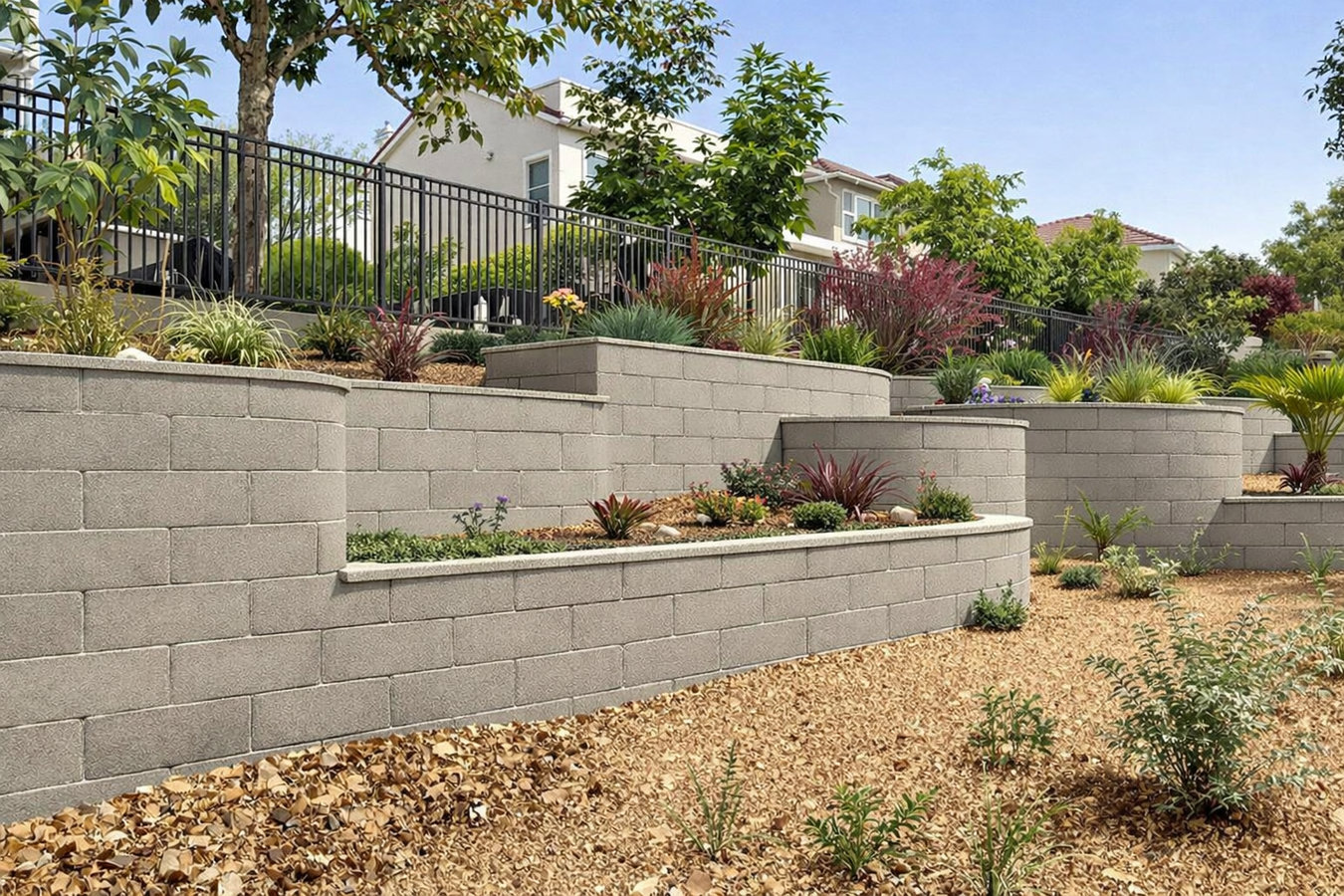
Sloping yard, sliding soil, or a wall that is already leaning? A properly drained concrete retaining wall holds your ground through Wyoming winters and clay soil movement.
Concrete retaining walls in Cheyenne hold back soil on sloped or uneven properties, stopping erosion and creating stable, usable yard space - most residential projects take two to five days from excavation to cleanup, with a one-week curing period before the area behind the wall is loaded.
For Cheyenne homeowners, the drainage built into the wall matters just as much as the concrete itself. Laramie County sits on clay-heavy soils that absorb water and push outward. Without a gravel drainage layer and perforated pipe behind the wall, that pressure builds until the wall cracks or tips. A wall built without drainage in this climate is a wall that will fail.
If you are also planning concrete floor installation for a garage or basement near a slope, the two projects are worth coordinating - grading and drainage decisions affect both, and doing them together avoids having to revisit the site plan later.
Bare patches at the top of a slope after rain, or soil piling at the bottom, mean the ground is moving. In Cheyenne, spring snowmelt speeds this up on clay-heavy lots. A retaining wall stops the process before it reaches your driveway or foundation.
A wall tilting away from the slope, or showing diagonal cracks from corners, is under more pressure than it was designed to handle. Cheyenne's freeze-thaw cycles will work into existing cracks each winter. Catching it early means a repair instead of a full collapse.
If water consistently collects near your foundation after storms or snowmelt, your yard may be directing runoff toward your home. A retaining wall combined with proper grading can redirect that flow and protect the foundation from slow water damage.
A hillside yard where furniture slides or gardening is impossible is a problem a retaining wall solves. Many Cheyenne homeowners in rolling neighborhoods use concrete retaining walls to create flat, usable terraces where steep slope made the space nearly worthless.
We build concrete retaining walls for residential and commercial properties across Cheyenne and the surrounding region. Every wall includes a drainage layer behind it - gravel plus a perforated pipe - because skipping drainage is the number one reason walls fail ahead of schedule in this climate. We also set footings below Cheyenne's frost line so the base cannot heave when temperatures drop.
Our work connects to the broader picture of your property. If your wall project is near a basement or slab, we can coordinate with concrete floor installation work to make sure grading and drainage serve both projects. If the slope is near a footing or foundation, we can tie in concrete footings work so the structural elements are planned together rather than in isolation.
Best for homeowners dealing with sloped yards, soil erosion, or unusable hillside space - creates flat, stable terraces and stops slope movement.
For walls that are already leaning, cracking, or showing drainage failure - we demo the old structure, fix the underlying drainage issue, and pour a new wall.
For steeper slopes where a single tall wall is not the right approach - multiple shorter walls in a stepped layout distribute pressure more effectively.
For parking lots, commercial properties, and projects requiring an engineer stamp - we handle permits and engineer coordination from start to finish.
Cheyenne sits at over 6,000 feet and regularly sees temperatures swing from well below zero in winter to warm summer days - a range that puts concrete through freeze-thaw stress dozens of times each year. Add Laramie County's expansive clay soils, which swell with moisture and push laterally against anything in their path, and you have conditions that demand a different approach than what works in lower-elevation or more temperate parts of the country. A wall built without drainage and without frost-depth footings will show problems within a few winters here. The Portland Cement Association publishes guidance on cold-weather concrete practices that is directly relevant to work in this region.
We serve Cheyenne and the surrounding area, including Laramie and Fort Collins. The high-altitude, clay soil, freeze-thaw combination is consistent across this region, and every wall we quote accounts for it - not just the ones where the customer thinks to ask.
We respond within 1 business day. We will ask a few questions about your slope and what you are trying to accomplish before scheduling a site visit.
We visit the property, assess the slope, soil type, and drainage conditions, and give you a written quote covering excavation, the wall itself, drainage installation, and cleanup.
If your wall height requires a permit from the City of Cheyenne, we handle the application. You get a confirmed start date once the permit is approved.
We dig out the base, build the wall, install the drainage layer behind it, and backfill in controlled layers. Most residential walls take two to five days from start to cleanup.
We respond within 1 business day. No obligation - just a straight answer about what your wall will cost, how long it will take, and what drainage we plan to include. After you submit, someone from our office will call to schedule a free on-site visit.
(307) 475-1948We install a gravel drainage layer and perforated pipe behind every wall we build. This is the single most important factor in how long a wall lasts - skipping it is one of the most common ways walls fail within a few years.
Cheyenne's frost can penetrate deep into the ground each winter. We set footings below the local frost line on every project so the wall base cannot heave or shift when temperatures drop. Shallow footings are a shortcut that shows up quickly in this climate.
We pull permits and coordinate city inspections on every project that requires them. A permitted wall has been reviewed by a third party - that matters when you sell your home and when a neighbor disputes the work.
Laramie County's clay-heavy soils demand a different approach than sandy or stable ground. We account for lateral pressure and moisture movement specific to this area on every wall we quote. See the American Concrete Institute for why drainage and mix selection matter in expansive soil regions.
Every retaining wall we build is designed for the specific conditions of your Cheyenne property - the slope, the soil type, the drainage path, and the local frost depth. That planning upfront is what separates a wall that stands for 50 years from one that needs attention after the first hard winter.
Pour a new basement or garage floor that holds up to Cheyenne's clay soils and freeze-thaw cycles.
Learn moreStructural footings poured to the correct depth for Cheyenne's frost line and soil conditions.
Learn moreCheyenne's short warm season fills contractor schedules fast once the ground thaws. Reaching out now means a confirmed start date before summer slots are gone.